Beyond Conservation Silos: Martina Gaglioti on Connecting Science, People, Policy and Collaborative Ecosystem Management
Martina Gaglioti explores the power of ecosystem management, interdisciplinary collaboration, and meaningful youth participation in connecting science, people, and policy to advance marine biodiversity conservation.
By Alfinna Yebelanti
How can we protect biodiversity effectively when ecosystems cross political boundaries, environmental challenges are interconnected, and the institutions responsible for addressing them often work in isolation?
For Martina Gaglioti, this is one of the central questions facing contemporary environmental governance.
Her work across marine science, ecosystem management, biodiversity conservation, and international policy reflects a conviction that protecting nature requires more than understanding individual species or habitats. It requires an understanding of how ecosystems function, how human activities influence them, and how different institutions and communities can work together to support their long-term health.
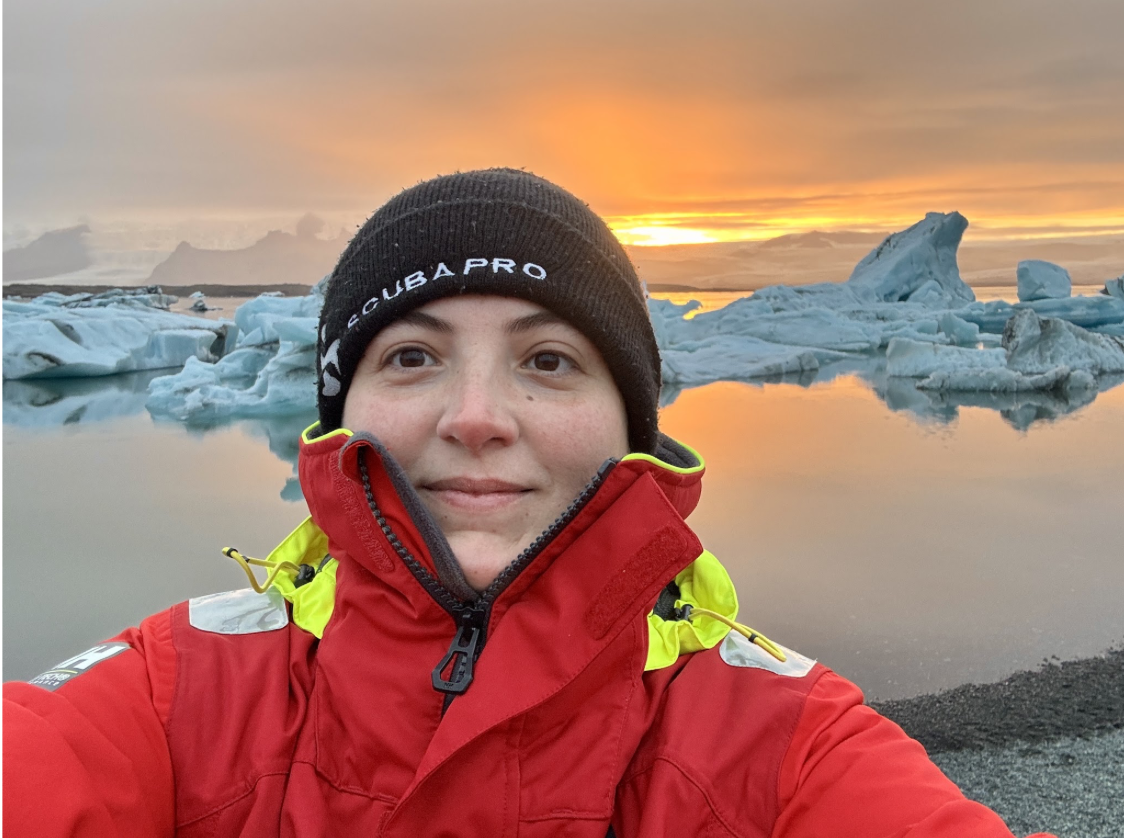
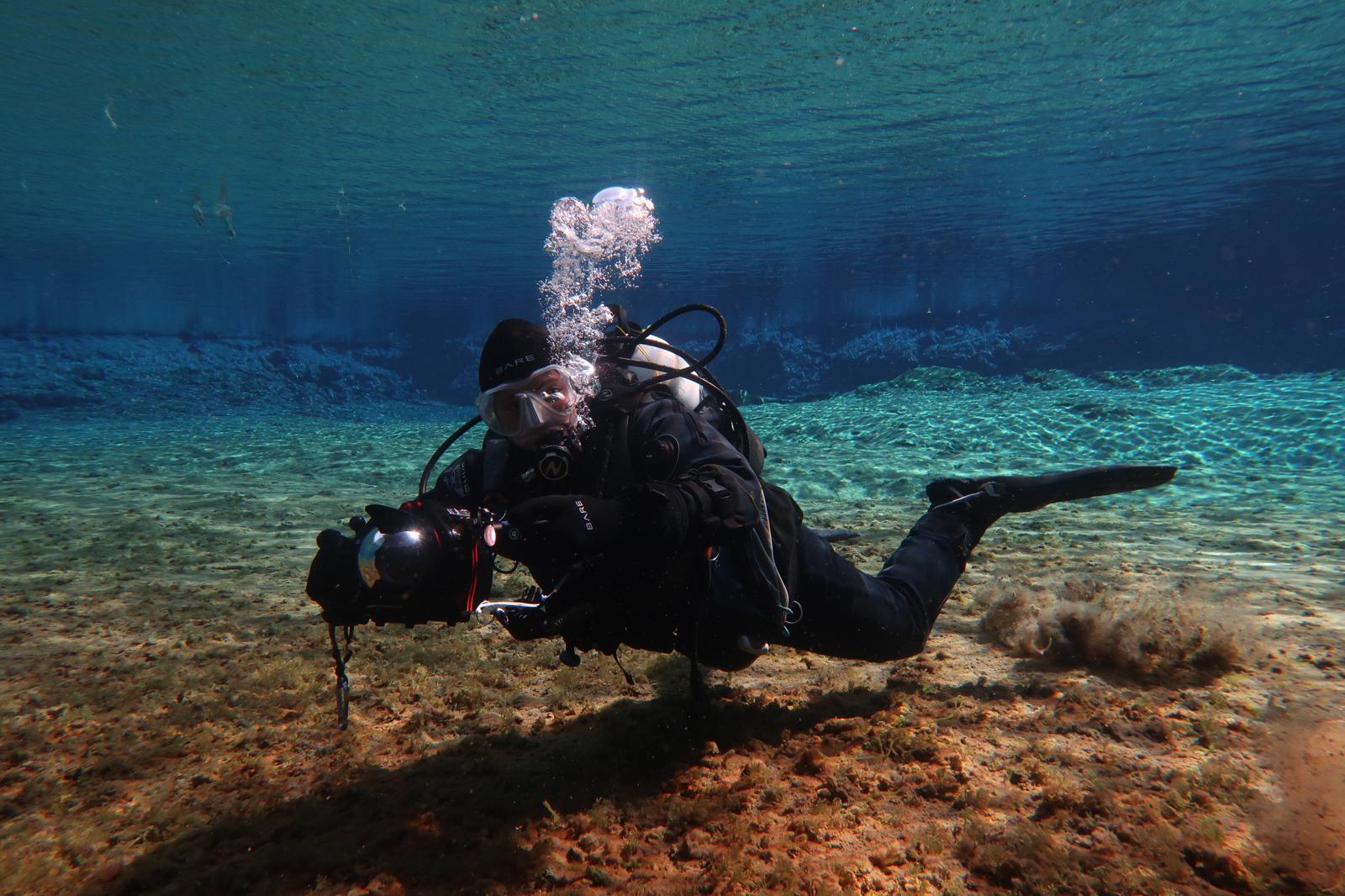
Martina's connection with the marine environment began at the age of nine, when she started diving. Those early experiences gave her the opportunity to encounter marine landscapes directly and helped shape the academic and professional choices that followed.
Growing up in an area home to a Biosphere Reserve, one of the earliest designated in the 1970s, further influenced her development and understanding of the relationship between people and nature.
Today, her work brings together conservation science, ecosystem restoration, international environmental governance, and collaboration across disciplines.
Through the International Union for Conservation of Nature (IUCN), she contributes to the Commission on Ecosystem Management (CEM) and engages with other commissions and specialist groups working across conservation, climate action, environmental policy, education, and marine biodiversity.
Her experience illustrates why effective conservation depends not only on scientific knowledge, but also on the ability to connect that knowledge with people, institutions, and decisions.
From Individual Species to Interconnected Ecosystems
A central principle guiding Martina's work is that environmental challenges cannot be addressed in isolation and just relying on short-term actions and scattered observations.
As she explains, “We cannot look at natural ecosystems without considering the socio-ecological systems around them and vice versa, even in the long-term”
This perspective underpins ecosystem-based management (EBM), which moves beyond managing individual resources or habitats to consider the wider ecological system, including human activities and the interactions between environmental, social, and economic processes.
Marine ecosystems make this particularly clear. Fisheries, shipping, agriculture, coastal development, water quality, and biodiversity conservation can all influence one another, yet responsibility for these areas is frequently divided among different and highly fragmented authorities.
A decision that benefits one sector may create unintended consequences for another. Likewise, a conservation measure that appears effective at a particular site may be insufficient if wider ecological processes or activities beyond its boundaries are overlooked.
For Martina, the complexity of today's environmental challenges demands a more integrated and straightforward approach.
The multiple planetary socio-ecological crises unfolding simultaneously require professionals to remain informed across rapidly developing fields, look beyond their immediate areas of expertise, and consider the broader consequences of human activities.
This is not simply a matter of combining scientific disciplines. It also requires understanding the social and political systems within which environmental decisions are made.
Ecosystem-based management therefore offers a framework for connecting ecological knowledge with the realities of human use, governance, and development.
Why Effective Ecosystem Management Remains Difficult
Although the principles of ecosystem-based management are widely relevant, implementing them is considerably more complicated than outlining them on paper.
One of the most persistent challenges is fragmented governance. Natural ecosystems do not recognise political boundaries, but the institutions responsible for managing them are often organised by administrative jurisdiction or individual economic sector.
Fisheries, shipping, agriculture, and water quality may be governed through separate agencies with different responsibilities, priorities, and legal frameworks.
Martina identifies transboundary and cross-sectoral governance as important approaches to overcoming these divisions. Regional frameworks and collaborative institutions can help authorities work towards a shared ecological vision rather than pursuing disconnected objectives.
However, high-level agreements are only part of the solution.
International and regional commitments must eventually be translated into policies and concrete actions at the local level. These actions must reflect local ecological conditions, local communities rights and territorial priorities.
A strategy that works well in one context may be definitely unsuitable or unfruitful in another. Field experience and an understanding of local circumstances are therefore essential to bridge the gap between overarching frameworks and practical implementation.
Another challenge is the mismatch between ecological and political timescales.
Political and economic cycles often operate over periods of two to five years, whereas ecosystem restoration and climate impacts can unfold over decades or even centuries, so the financial and scientific instruments need to be planned accordingly to fill the extant gaps and spatio-temporal misalignments.
Martina argues that conservation requires long-term targets capable of surviving changes in political leadership. Funding mechanisms must also support sustained work rather than relying exclusively on short-term grants that may end before meaningful ecological outcomes can be assessed. When it comes to financial sustainability it is also a matter of mental health and sustainable livelihoods of the experts involved in the field monitoring or whatever kind of research. Being a scientist is a proper job and should be considered accordingly.
Environmental awareness and effective conservation, in her view, should not be constrained by political preferences. Protecting ecosystems is a shared responsibility that extends beyond short-term institutional or electoral priorities.
Acting Responsibly Without Waiting for Perfect Data
Ecosystem management also depends on extensive information about species interactions, food webs, physical processes, and socio-economic conditions.
Yet managers rarely possess a complete picture of the systems they are responsible for protecting.
For Martina, this creates an important dilemma: waiting for perfect information can delay necessary action, but acting without considering uncertainty can create additional environmental risks.
She therefore emphasises the importance of using the best available science, applying the precautionary principle, and adopting adaptive management approaches that can evolve as new evidence emerges.
This means recognising uncertainty without allowing it to become an excuse for inaction.
Effective ecosystem management must also consider the distribution of influence among stakeholders. Ecosystems support many different users, and aligning their interests can be difficult, particularly when powerful economic interests overshadow the concerns of local communities or long-term sustainability objectives.
Co-management approaches and structured marine spatial planning can help create more transparent processes for considering competing interests and identifying workable solutions.
Another persistent barrier is the difficulty of translating ecological value into terms that decision-makers can readily understand.
How can the value of a seagrass meadow be communicated to someone responsible for economic planning or infrastructure investment?
Martina points to natural capital accounting and ecosystem-service valuation as potential ways to bridge this gap. By making the benefits of ecosystems more visible within economic and policy frameworks, these approaches can help demonstrate why conservation may also make practical financial sense.
For example, protecting coastal seagrass meadows may help reduce coastal erosion and lower the need for expensive interventions such as concrete barriers or beach nourishment. We need to approach the socio-ecological crises we are facing with nature-inclusive approaches and Nature-based solutions, not fight or build whatever kind of barrier against nature!
Such examples demonstrate that environmental protection and economic interests do not always have to be treated as competing priorities. Better information can help identify situations where ecological integrity and long-term economic resilience reinforce one another.
From National Restoration Initiatives to International Conservation
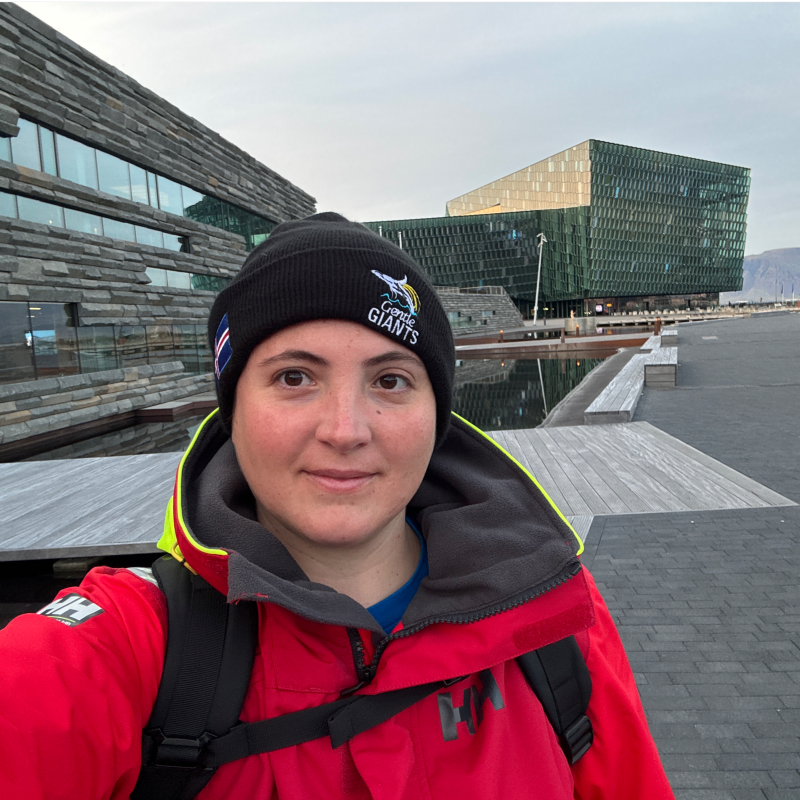
Martina's work reflects how ecosystem management connects local action with broader conservation policy.
Although her formal appointment to the IUCN Commission on Ecosystem Management is relatively recent, many of the issues addressed by the commission have been part of her professional journey for years.
One particularly meaningful experience was contributing to the development of Italy's draft national plan for marine ecosystems and the establishment of the national ecological restoration network, RiRE.
She describes the process as challenging but rewarding, especially because it was initiated by a small and highly motivated group of young professionals from different disciplines, including law, economics, and environmental sciences.
The experience demonstrated the value of bringing complementary perspectives together around a shared objective.
Ecosystem restoration is not solely a technical or biological exercise. Its success can also depend on legal frameworks, economic considerations, institutional arrangements, and the ability of different stakeholders to cooperate.
Martina's experience with RiRE reflects the potential of interdisciplinary collaboration to create initiatives that may be difficult to develop within a single professional or institutional silo.
Her conservation work has also extended to international negotiations.
At CITES COP20, she contributed to negotiations concerning the proposed uplisting of highly threatened shark and ray species included in the IUCN Red List to Appendix I of the Convention on International Trade in Endangered Species of Wild Fauna and Flora (CITES).
She describes this experience as a demanding effort to advocate for threatened species within a complex international process.
Martina has also participated in the IUCN Taskforce on Resolution 107, which focuses on reducing the impacts of fisheries on marine biodiversity.
Working alongside fisheries experts and observers associated with key fisheries-management advisory bodies gave her the opportunity to expand her knowledge beyond areas she had explored extensively during her academic training.
The experience also connected her with important developments in international ocean governance, including those related to the Agreement on Biodiversity Beyond National Jurisdiction (BBNJ).
Alongside her policy and institutional work, Martina continues to value field expeditions and direct engagement with marine environments. As a UNESCO Earth Network Expert, she has maintained a connection with field activities involving Biosphere Reserves around the world.
Together, these experiences highlight an important aspect of her approach: effective conservation requires scientific understanding, practical experience, and the ability to work across institutional and disciplinary boundaries.
The Need for a More Transformative Research Culture
For Martina, one of the barriers to effective conservation begins within the scientific community itself.
Although conferences and professional networks provide opportunities for researchers to meet, scientific work can remain surprisingly fragmented.
She observes that academic research is sometimes evaluated in ways that prioritise performance and visibility over transformative impact. The pressure to publish frequently may leave less time for researchers to build interdisciplinary knowledge, explore unfamiliar fields, or establish collaborations beyond their immediate research areas.
This can make it difficult for early-career professionals to pursue alternative paths, particularly when their interests extend beyond the subjects or methods established by their academic supervisors.
Martina believes that the complexity of current environmental challenges makes it increasingly necessary for researchers to leave their comfort zones.
The inability of academia to absorb all emerging talent, alongside the urgency of environmental problems, has also encouraged some professionals to explore different ways of contributing to scientific and conservation work.
Her perspective highlights a broader issue: producing scientific knowledge and making that knowledge useful are not necessarily the same thing.
Research becomes more transformative when it can inform decisions, connect different areas of expertise, and contribute to meaningful changes in environmental practice.
Achieving this requires incentives and opportunities that support collaboration, knowledge exchange, and engagement with the wider world beyond individual research outputs.
COP17: Young People Must Be Recognised as Actors for Biodiversity
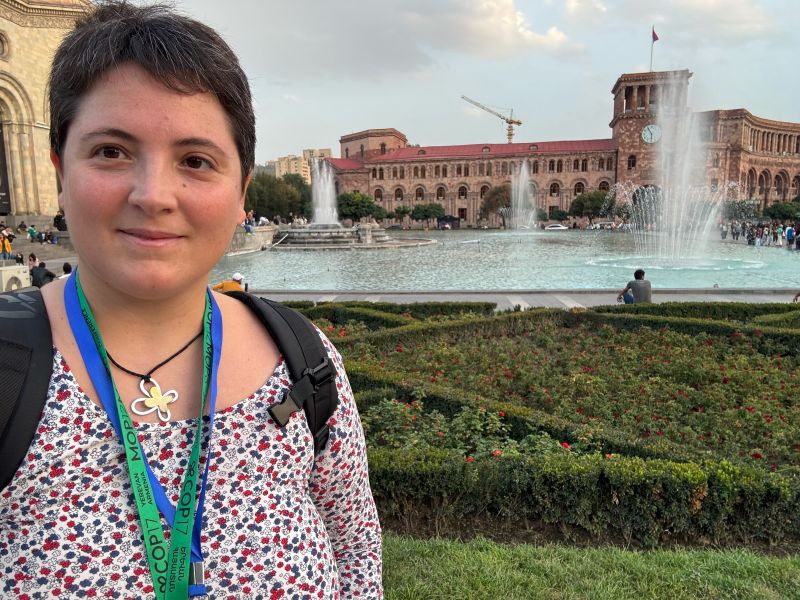
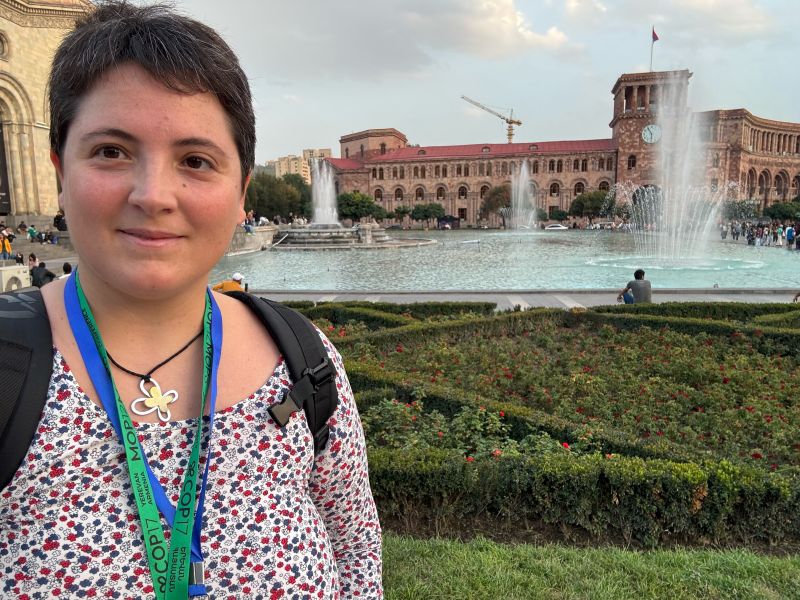
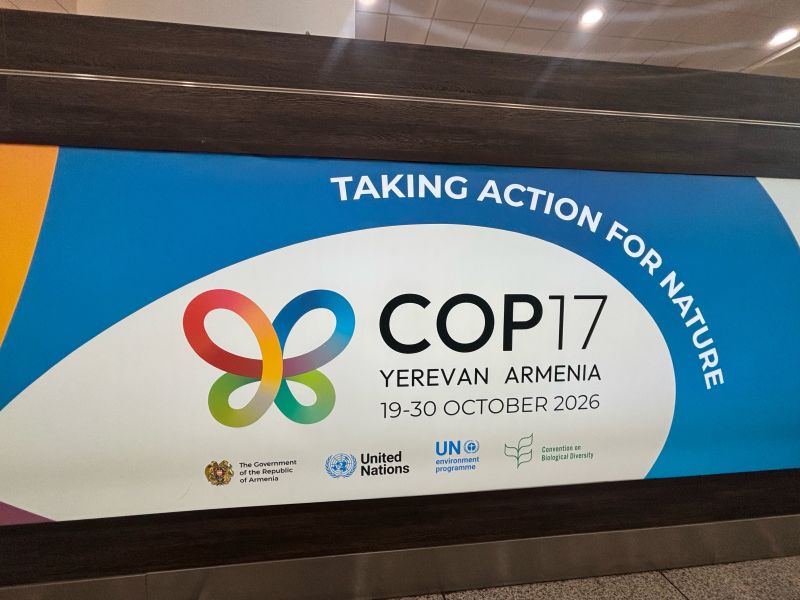
These questions of participation and governance are also at the centre of Martina Gaglioti’s involvement in the seventeenth Conference of the Parties to the Convention on Biological Diversity (CBD COP17), taking place in Yerevan, Armenia, from 19 to 30 October 2026.
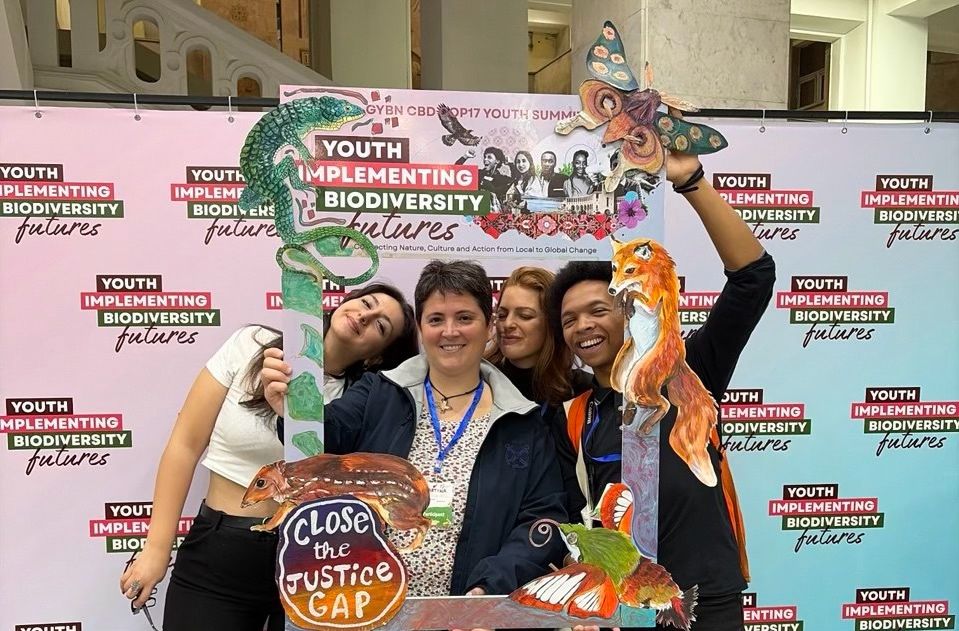
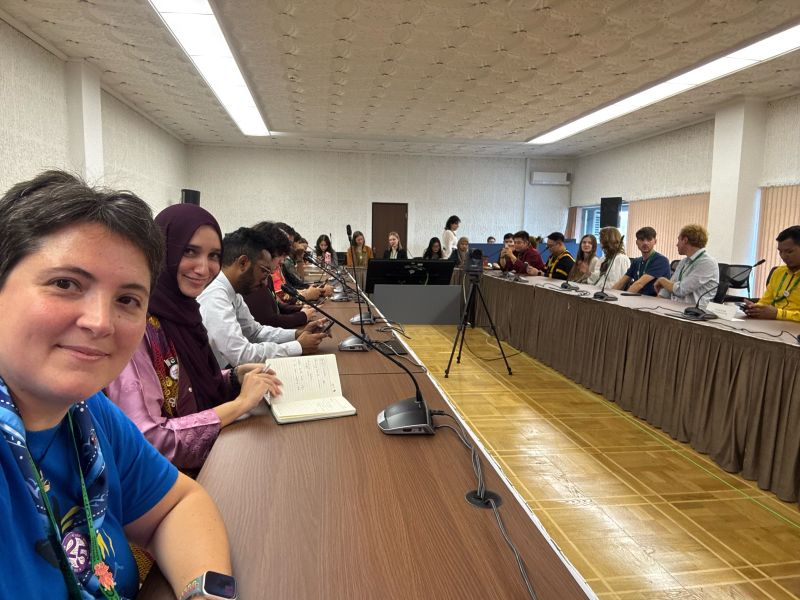
Participating as part of a youth delegation following her commitment as co-coordinator of the Global Youth Biodiversity Network Europe (GYBN Europe), Martina is contributing to a broader effort to ensure that young people have a meaningful role in shaping global biodiversity action.
Under the theme “Taking action for nature,” COP17 is reviewing global progress towards implementing the Kunming–Montreal Global Biodiversity Framework (KMGBF), adopted in 2022. The first global review highlights significant international engagement, but also uneven progress and persistent gaps. With the 2030 deadline approaching, accelerating implementation of the Framework’s 23 targets has become increasingly urgent, including the ambition to protect 30% of the world’s land and sea.
A key part of youth engagement at COP17 is the Youth Pavilion, a dedicated space for young people to connect, exchange experiences, present their initiatives, and contribute to discussions on biodiversity conservation. Through her involvement with GYBN Europe, Martina is part of a wider youth movement seeking to connect regional priorities and youth-led initiatives with international biodiversity policy.
For Martina, this participation represents both a responsibility and an opportunity to deepen her understanding of international environmental negotiations. She recognises that conferences of the Parties are often criticised for political constraints, unmet objectives, and tokenistic participation, where stakeholders may be included in formal processes without having meaningful opportunities to influence outcomes.
This concern is particularly relevant to young professionals, whose technical expertise and practical experience can be overlooked when participation is treated primarily as a matter of representation. Martina believes young people should be recognised not simply as attendees, but as active contributors and implementers of biodiversity action.
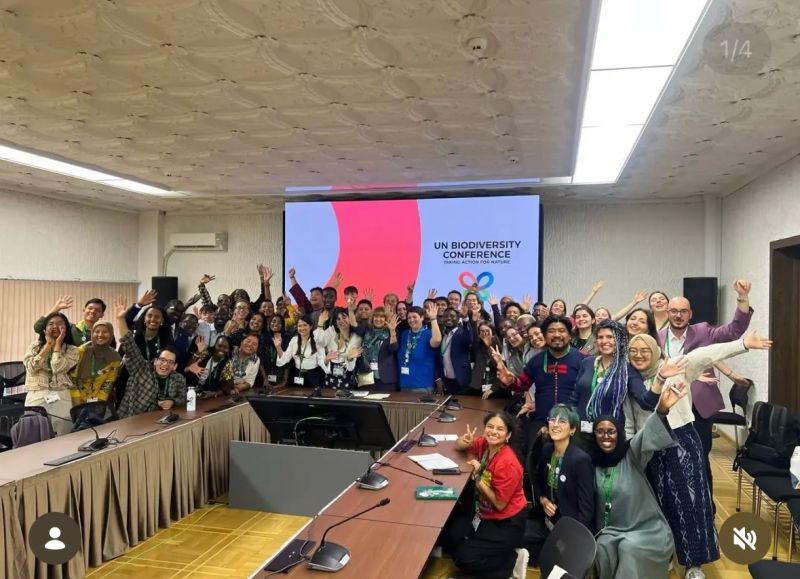
The discussions taking place at COP17 also highlight the importance of connecting global commitments with the realities faced by those working on the ground. Governments cannot implement the KMGBF alone. Indigenous Peoples and local communities, women, youth, local authorities, businesses, researchers, and civil society all have knowledge, capacities, and resources that can strengthen implementation.
IUCN has similarly called for more action-oriented decisions based on the global review, stronger biodiversity financing, improved technical and scientific cooperation, and greater participation by non-State actors. It has also emphasised the need for better policy coherence across biodiversity, climate, and other environmental agendas, while safeguarding dedicated commitments to biodiversity.
These priorities reflect a broader challenge: international agreements can establish shared ambitions, but their success ultimately depends on the resources, cooperation, and sustained action required to deliver them.
For Martina, meaningful youth participation is not an additional element of environmental governance. It is part of the process of bringing different forms of knowledge, experience, and expertise into decisions that affect biodiversity. The value of COP17 will therefore depend not only on the commitments made during the conference, but also on whether young people and other stakeholders can continue contributing to their implementation long after negotiations conclude.
Ozeaon: Building Connections Beyond Institutional Silos
Martina sees potential in Ozeaon's ambition to connect ocean and climate projects, researchers, organisations, innovators, communities, and potential funders within a shared ecosystem.
She recognises that similar portals and digital infrastructures have existed before, including initiatives designed to improve stakeholder connections and access to scientific information. Some have encountered resistance because competition can take precedence over collaboration, institutions may restrict information-sharing, and countries or professional communities may approach openness differently.
These challenges are important because a platform cannot create meaningful collaboration simply by making information available.
However, Martina believes that the underlying need for stronger connections remains.
Working primarily as a consultant or freelance researcher may give her a degree of independence in how she approaches professional collaboration. From this perspective, she sees considerable value in helping people discover colleagues working on related subjects, establish respectful relationships, and identify opportunities for joint work.
A more connected community could make it easier for researchers and practitioners to become aware of relevant initiatives, exchange expertise, and develop collaborations that might otherwise never take place.
She also sees potential in encouraging broader participation in initiatives connected to the UN Ocean Decade, helping create a more comprehensive community around shared scientific and environmental objectives.
Yet Martina is clear that the effectiveness of such an effort depends on the willingness of participants to contribute.
Ethical and transparent information-sharing is essential. Collaboration must be built through active participation and respectful relationships, rather than treated as a principle that organisations promote without practising.
This perspective aligns with Ozeaon's ambition to bring open science, education, project visibility, collaboration, and funding opportunities closer together.
By helping people discover projects, share knowledge, and identify potential partners, Ozeaon seeks to create more opportunities for ocean and climate initiatives to reach relevant communities and resources.
The goal is not simply to build another information portal. It is to strengthen the connections that allow knowledge to move between people, disciplines, and organisations—and ultimately support practical action.
A Message for the Next Generation of Ocean Professionals
Martina's career has involved many steps, obstacles, and periods of uncertainty that do not always appear in formal CVs or receive recognition during recruitment.
Her advice to younger colleagues is to remain committed to their passions, even when the path forward is difficult.
She encourages early-career professionals not to be discouraged by a lack of immediate recognition or by ideas that take time to gain acceptance. Pioneering work may require patience, particularly when it challenges established approaches or moves beyond familiar professional boundaries.
She also encourages young people to value their personal growth, explore opportunities to broaden their knowledge, and remain guided by their ethics—even when doing so means taking a position that is not immediately popular or appreciated.
For Martina, professional development is not simply about following an established career path. It is also about building the knowledge, confidence, and integrity needed to contribute meaningfully to complex challenges.
Her journey demonstrates that environmental work can take many forms, from field expeditions and ecosystem restoration to international negotiations, interdisciplinary research, and collaborative initiatives.
Each can contribute to a broader effort to protect biodiversity, provided that people remain willing to learn, exchange knowledge, and work towards shared objectives.
From Connected Knowledge to Collective Action
Martina's experiences across ecosystem management, restoration, international conservation, and youth engagement point to a common conclusion: environmental challenges cannot be solved effectively through isolated efforts.
Scientific knowledge must connect with policy. International commitments must translate into local implementation. Conservation initiatives must account for ecological and social realities. And young professionals must be recognised for the contributions they can make.
For Ozeaon, her perspective reinforces the importance of building an ecosystem where knowledge, people, and opportunities can connect more easily.
Digital platforms can help reduce fragmentation, make work more visible, and create pathways towards collaboration. Their long-term value, however, depends on the trust, transparency, and willingness to cooperate that participants bring to them.
A more connected ocean community will not emerge from technology alone. It will be built by people who recognise that their work is part of a wider collective effort.
Beyond conservation silos, the future of ocean protection depends on connecting science, people, and policy, turning those connections into meaningful action.
About Martina Gaglioti
Martina Gaglioti contributes to the International Union for Conservation of Nature (IUCN), particularly its Commission on Ecosystem Management (CEM), and engages with other commissions and specialist groups working across conservation, climate action, environmental policy, education, and marine biodiversity.
Her work brings together conservation science, ecosystem restoration, international environmental governance, and interdisciplinary collaboration, reflecting her commitment to connecting scientific knowledge with people, institutions, and policy decisions to advance effective biodiversity conservation.

Alfinna Yebelanti
Stakeholder Management
Alfinna supports stakeholder engagement and community development at Ozeaon, helping strengthen the platform's relationships across sustainability, ocean governance, environmental policy, and international collaboration.
She brings experience in pentahelix stakeholder engagement and cross-sector collaboration across universities, NGOs, startups, government agencies, and international organisations. Her work contributes to partnership development and collaborative networks around climate, ocean, and regenerative initiatives.
- Stakeholder Engagement
- Community Development
- Partnerships