Can AI Make Conservation More Transparent?
AI can make ocean conservation progress easier to understand by connecting environmental data, open science and project reporting. With transparent methods and accountable governance, evidence can build public trust.
By Reneta Georgieva
From ocean data to public trust, artificial intelligence could help make conservation progress easier to see if the evidence stays open, understandable and accountable.
The visibility gap
A reef restoration project can plant coral fragments, a coastal community can rebuild wetlands, and a marine-protection initiative can reduce pressure on vulnerable habitats. But for people outside the project team, a question often remains: how do we know what changed? Funding announcements and progress updates tell only part of the story. Long-term ecological outcomes can be difficult to measure, data may sit in separate systems, and technical reports can be hard for the public to interpret.
This is where artificial intelligence may help. By processing large volumes of satellite imagery, underwater camera footage, acoustic recordings and environmental measurements, AI can help researchers identify patterns that would otherwise take far longer to detect. It can support monitoring of habitat change, species presence and possible threats, and help turn complex observations into information that project teams, funders and communities can use.
Yet faster analysis is not the same as transparency. A model can misidentify a species, miss changes in a poorly sampled area or produce a confident-looking result from incomplete data. For conservation, trust depends not only on what a system concludes, but on how it reached that conclusion, what remains uncertain and whether the evidence can be checked.
Making the evidence visible
A more transparent conservation project connects its goals with a clear record of activity and results. What was planned? Where did resources go? Which indicators are being tracked? What has changed since the baseline, and who has checked the findings? AI can help organise and interpret evidence across these questions, but the underlying measurements, methods, dates and limitations should remain visible.
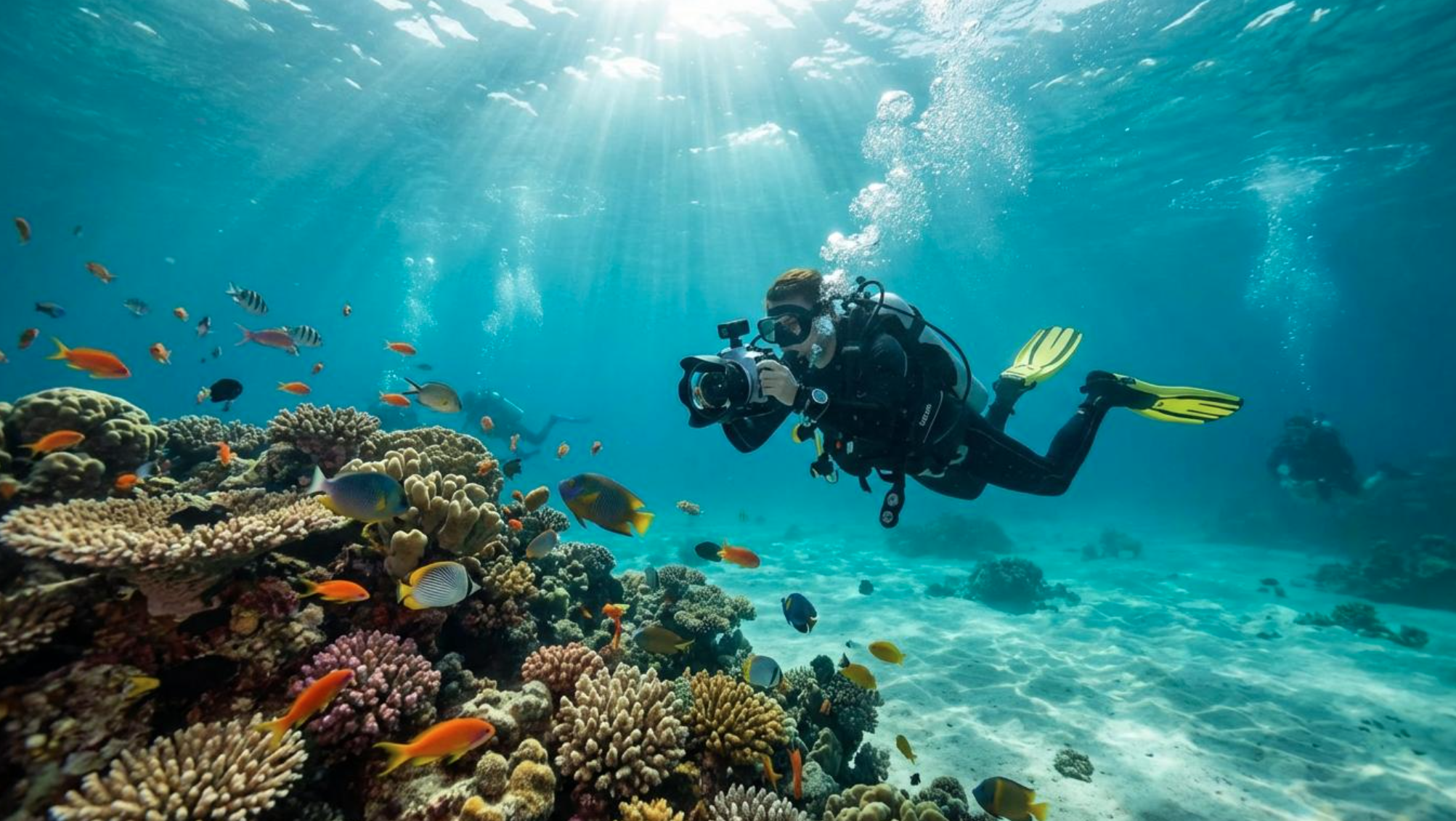
Marine conservation shows why this matters. Reefs, seagrass meadows, mangroves and open-ocean ecosystems are dynamic, and meaningful change may unfold over seasons or years. Remote sensing can provide a broad view; underwater surveys, acoustic sensors, environmental DNA and local observations can add detail. AI may help bring these different sources together, flag unusual changes and prioritise locations for expert review. It cannot replace field science or the knowledge of people who live and work along the coast.
The strongest approach is therefore a chain of evidence: observations are collected with documented methods; AI-assisted analysis is labelled as such; specialists validate important findings; and results are reported alongside uncertainty. Open data and reusable methods can allow independent researchers to test conclusions, while safeguards are needed for sensitive species locations, community knowledge and personal data.
Ozeaon is building a regenerative knowledge and impact ecosystem designed to connect open science, education, projects, organisations, opportunities and pathways to support. Its premise is relevant to conservation transparency: knowledge has greater value when it can travel beyond a single report or institution and connect with people who can question it, contribute to it or help turn it into action.
Through project visibility, research-informed articles, educational resources and an innovation network, Ozeaon aims to make ocean and climate work easier to discover and understand. Its website also describes a developing verification and climate-intelligence layer, including digital monitoring, reporting and verification (dMRV), project-integrity support, governance and AI-related tools. Some of these capabilities are identified as part of a phased roadmap, rather than as fully available services today.
This creates a useful role for AI without treating the technology as a guarantee. In a future conservation workflow, AI could help summarise project updates, organise monitoring evidence, compare reported milestones with documented indicators and make technical findings more accessible to different audiences.
The central opportunity is to connect three things that are too often separated: what a project says it will do, the evidence it gathers while doing it, and the outcomes it can credibly demonstrate. Ozeaon’s emphasis on open knowledge, visible projects and pathways from contribution to impact offers a framework for bringing those pieces closer together.
Transparency is a practice, not a feature
For AI to strengthen conservation accountability, projects need to publish more than polished dashboards. Useful reporting should distinguish money raised from money spent, activities completed from ecological outcomes, and automated estimates from expert-verified results. It should also show the baseline, explain how indicators were chosen, disclose uncertainty and record changes to methods. Independent review and meaningful community participation remain essential.
There are risks to manage. Data can be biased toward well-monitored places, AI tools can be difficult to audit, and sensitive ecological information can be misused. Technology also has its own material and energy footprint. Responsible systems should therefore be proportionate to the conservation problem, governed transparently and designed with the people affected by the project.
The goal is not to make every ecosystem legible through a screen. It is to make conservation claims easier to question, evidence easier to access and progress easier to assess. AI can help reveal patterns in the ocean’s complexity, while open science and accountable governance help ensure those patterns are not mistaken for proof on their own.
“AI can make conservation evidence easier to interpret. Transparency makes it possible to trust, challenge and act on that evidence.”
From insight to accountability
A transparent future for conservation will not be built by algorithms alone. It will depend on reliable field data, open methods, independent scrutiny and platforms that connect knowledge with participation. For ocean projects in particular, that means linking the story of a restoration effort to evidence of ecological change and making both accessible to the people whose support and stewardship it needs.
That is the opportunity at the intersection of AI and Ozeaon’s mission: not simply to generate more information, but to help knowledge move toward collective action. The measure of success will be whether communities, researchers and funders can better understand what is happening, what remains uncertain and what should happen next.

Reneta Georgieva
dMRV Specialist
- OCIS
- dMRV
- AI
- Climate Intelligence
- AI CoE