The 2026 El Niño: Rising Seas, Warming Oceans, and the Imperative for Coastal Resilience
As ocean temperatures reach unprecedented levels, a powerful El Niño is amplifying interconnected risks across ecosystems and coastlines, underscoring the urgent need for integrated monitoring, adaptation, and resilient ocean management.
By Reneta Georgieva
As 2026 unfolds, the global ocean is entering territory that would have seemed extraordinary only a few decades ago. From the equatorial Pacific to the world’s coastlines, a convergence of heat, shifting circulation, rising seas, and increasingly volatile climate patterns is revealing an ocean system under sustained pressure.
According to Copernicus observations, the global extra-polar ocean surface reached an average temperature of 20.86°C in June 2026, the highest value recorded for that month in the observational record. It is tempting to view such a figure as simply another climate record. But oceanographers know that temperature is more than a number. It is a measure of energy, and today, the ocean is carrying an extraordinary amount of it.
That heat is now meeting one of the planet’s most powerful engines of climate variability: El Niño.
When a Hot Ocean Meets a Powerful El Niño
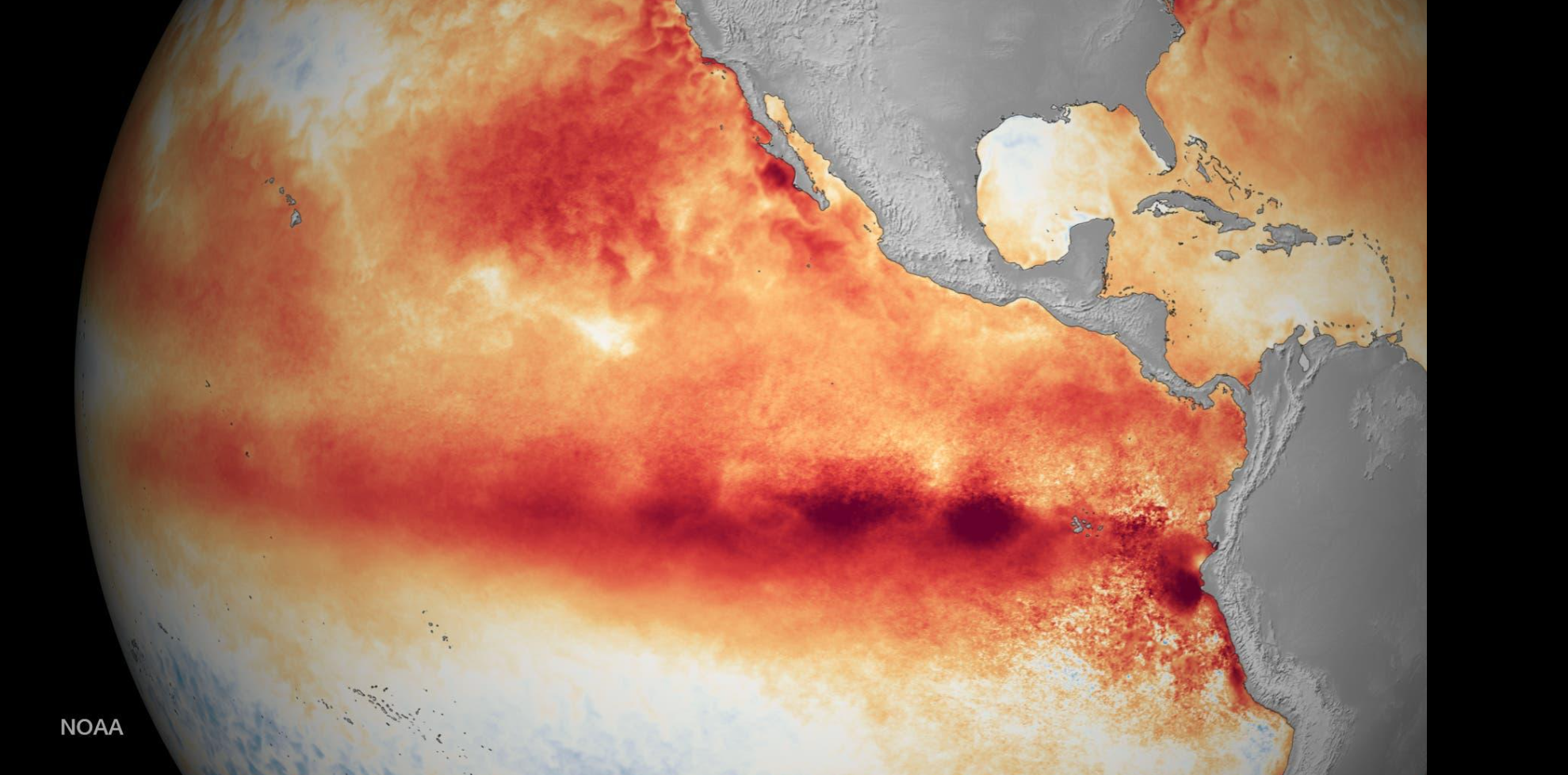
By August, NOAA’s ENSO Diagnostic Discussion was reporting a rapidly strengthening El Niño, with a greater than 90 percent probability of a very strong event continuing through the Northern Hemisphere autumn and winter. Across the eastern equatorial Pacific, sea-surface temperature anomalies had climbed beyond +2°C, while substantial warmth was building beneath the surface.
The ocean is not merely a thin skin exposed to the atmosphere. Beneath the surface lies a vast reservoir of stored heat that can move across ocean basins and re-emerge months or seasons later. When anomalously warm water accumulates below the surface, it can help sustain and amplify atmospheric and oceanic disturbances long after surface warming first appears.
El Niño is therefore not occurring in the climate system of the twentieth century. It is unfolding in an ocean whose baseline temperature has already been pushed upward by decades of human-driven warming. The background state has changed, and that changes the environment in which natural climate variability operates.
A Climate System With a New Baseline
Recent research published in Nature in August 2026 adds another dimension to the story. Drawing on a 1,000-year coral-based reconstruction of Pacific sea-surface temperatures, researchers found evidence that anthropogenic warming is influencing the fundamental behaviour of El Niño, including its potential intensity and frequency.
The chemical signatures preserved in corals provide information about ancient marine temperatures, allowing scientists to reconstruct patterns of Pacific variability long before satellites, buoys, and research vessels began systematically observing the ocean. These records provide an important historical perspective against which today’s increasingly unusual conditions can be measured.
A warmer baseline ocean can provide more energy for an already powerful El Niño. In turn, El Niño can redistribute enormous quantities of heat across the Pacific and beyond, shifting atmospheric circulation, altering rainfall patterns, disturbing marine ecosystems, and contributing to temporary changes in global mean sea level.
Heat Moves. So Does the Risk.
As heat migrates through the Pacific and interacts with the atmosphere, regional sea levels can shift substantially. Changes in winds, ocean currents, thermal expansion, and the redistribution of water can temporarily raise or lower sea level from one region to another. Globally, changes in ocean heat and mass distribution can also contribute to short-term variations in sea-level rise.
These changes matter because risks rarely occur in isolation.
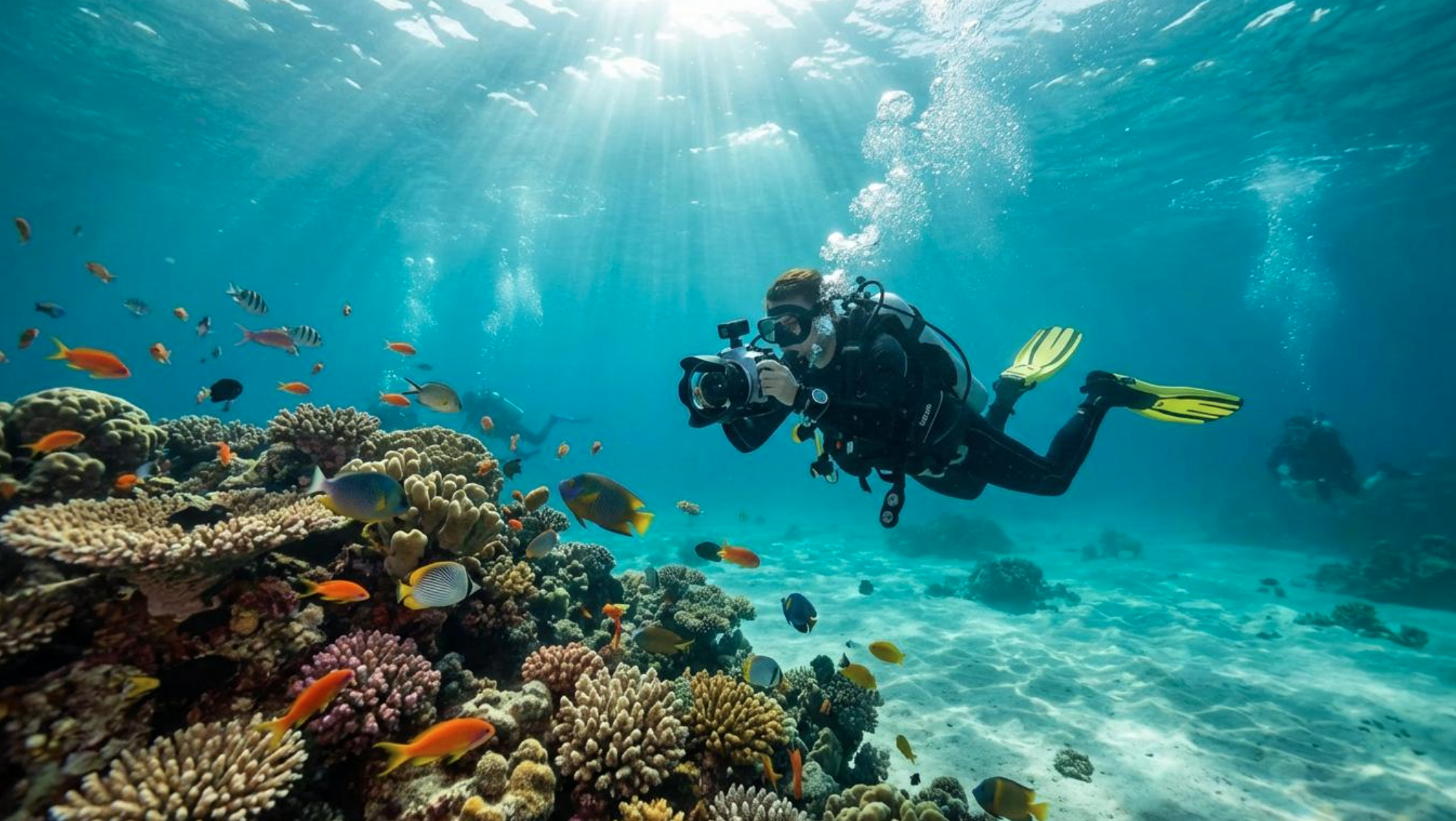
A temporary increase in sea level can magnify the consequences of storm surge. Warmer waters can place additional stress on coral reefs and other temperature-sensitive ecosystems. Marine species can move beyond their traditional ranges, fisheries can be disrupted, and coastal infrastructure designed around historical climate conditions can suddenly find itself operating outside the conditions for which it was built.
Heat interacts with El Niño. El Niño interacts with sea level. Sea-level changes interact with storms and coastal infrastructure. Thermal stress interacts with ecosystems already facing multiple pressures.
The result is a system of interconnected and compounding risks.
From Observation to Ocean Action
The question confronting us is no longer simply how warm the ocean has become.
It is what we do with that knowledge.
This is where Ozeaon enters the conversation at the intersection between oceanographic science and practical climate adaptation. The challenge is to transform observations of the ocean into decisions that can be implemented by businesses, policymakers, coastal planners, and communities.
Real-time ocean data can provide an early picture of changing thermal conditions, sea-level dynamics, and ecosystem stress. But information alone is not resilience. Its value lies in turning that information into action: anticipating risks, protecting critical infrastructure, restoring coastal ecosystems, and designing management strategies for a climate that no longer behaves according to historical averages.
Ecosystem-based restoration is particularly important in this context. Healthy coastal and marine ecosystems can provide natural protection while simultaneously supporting biodiversity, fisheries, carbon storage, and local livelihoods.
Mangroves, wetlands, seagrass meadows, oyster reefs, and other coastal habitats are not simply environmental assets. They can become part of the infrastructure of climate adaptation.
The future of ocean management will increasingly depend on seeing these systems as connected.
Navigating an Unfamiliar Ocean
The 2026 El Niño is a reminder that the ocean does not experience climate change as a collection of separate statistics. It experiences it as a physical system - one in which heat accumulates, currents shift, ecosystems respond, and disturbances propagate across thousands of kilometres.
Copernicus and NOAA provide the measurements that allow us to see these changes taking place. Paleoclimate records show us how unusual some of them may be. Oceanographic science helps explain the mechanisms connecting them.
But observation must ultimately lead somewhere.
If the ocean is entering an era of compound and interacting risks, adaptation must become equally interconnected. Coastal protection, marine conservation, ocean monitoring, resilient infrastructure, sustainable resource management, and ecosystem restoration can no longer be treated as separate agendas.
The ocean is already connecting them for us.
2026 may be remembered not simply as another year of record ocean temperatures, but as a moment when the relationship between a warming climate and ocean variability became impossible to ignore.
The warning is written across the surface of the sea. The challenge and the opportunity is learning how to navigate what comes next.

Reneta Georgieva
dMRV Specialist
- OCIS
- dMRV
- AI
- Climate Intelligence
- AI CoE