The Next Antibiotic May Be Hidden in Coral Reefs
Coral reefs harbor vast, unexplored microbial diversity that could yield new antibiotics. As resistance grows and reefs decline, protecting these ecosystems may also protect future medical discoveries.
By Reneta Georgieva
Coral reefs are among the most biologically diverse places on Earth. Hidden within them is another kind of diversity microbial, genetic and chemical that scientists are only beginning to explore. As antibiotic resistance grows, these overlooked reef communities could offer a new source of compounds for medicine.
Beneath the surface of a coral reef, life rarely exists in isolation.
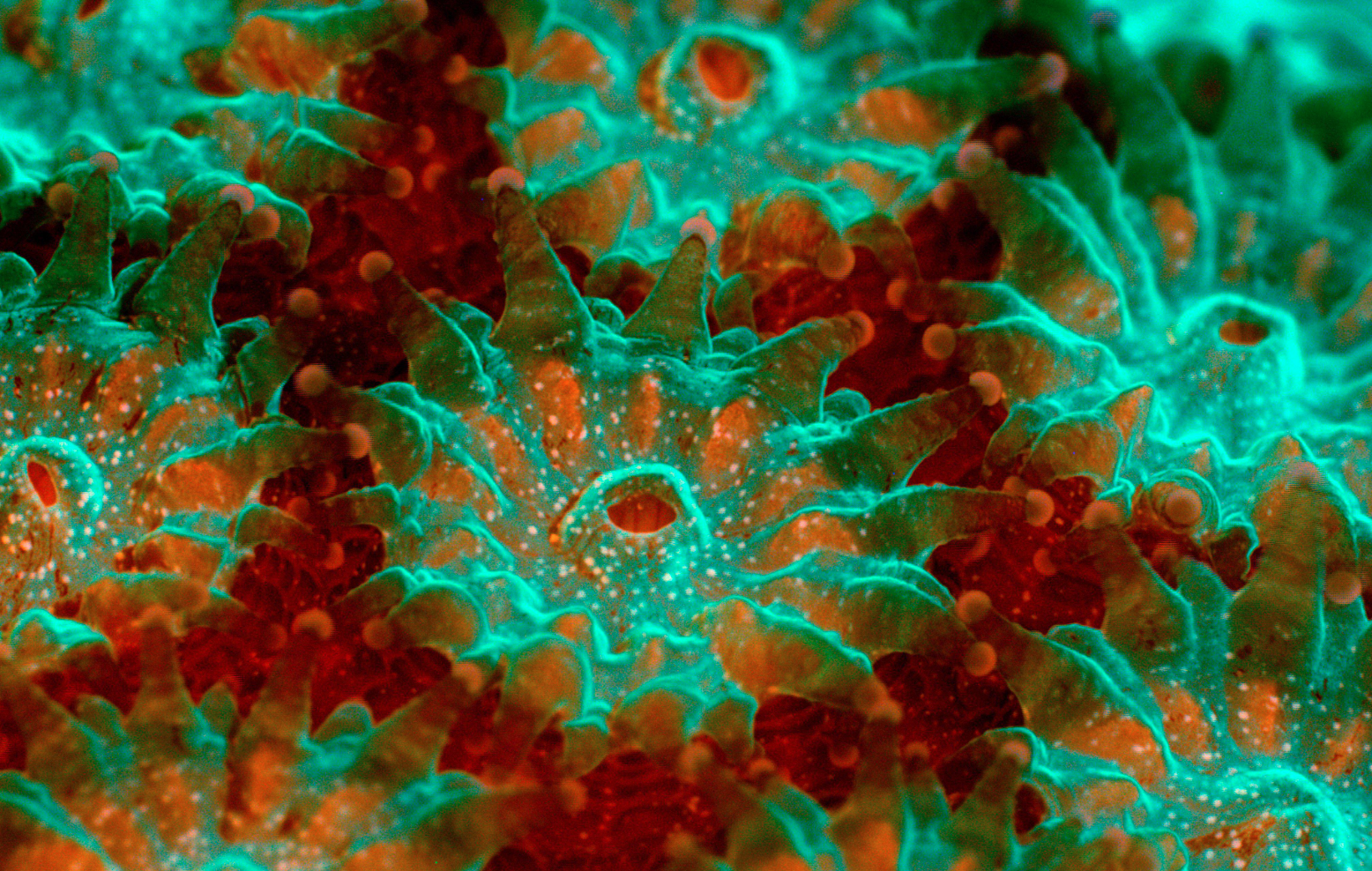
A coral colony is surrounded by bacteria, archaea, fungi and other microscopic organisms, all living in close association with their host and with one another. They compete, cooperate and exchange chemicals in ways that are largely invisible to us.
For scientists searching for new medicines, that microscopic world is becoming increasingly difficult to ignore.
Antimicrobial resistance is making infections harder to treat, while the discovery of genuinely new antibiotics has become an increasingly challenging task. Researchers are consequently looking beyond the environments that have traditionally supplied most natural products, exploring ecosystems where microbial diversity remains poorly understood.
Coral reefs are emerging as one of those places.
A major study published in Nature in 2026 offers a glimpse of just how much biological information may be hidden there. Researchers analysed microbial genomes from 820 reef-building coral samples collected across 99 reefs and 32 Pacific islands.
What they found was striking: coral-associated microbial communities contain an extraordinary range of genes associated with the production of natural compounds.
Many of those compounds have never been studied. Some may never be produced under laboratory conditions. Others may turn out to have no useful application at all.
But among them could be molecules with properties that scientists have yet to discover.
And that changes the way we might think about a coral reef.
It is not simply a landscape built by corals and inhabited by fish, crustaceans and other marine life. It is also a vast microbial ecosystem, one whose chemistry is only beginning to come into focus.
From a coral-associated bacterium to a potential antibiotic
There is already evidence that these microbial communities can produce compounds capable of affecting medically important bacteria.
In 2026, researchers reported the discovery of a group of antibiotics known as marinocyclins, produced by a bacterium associated with the octocoral Eunicella labiata.
The compounds showed antibacterial activity against a range of organisms, including drug-resistant pathogens.
Among those tested were members of the ESKAPE group, a collection of bacteria responsible for many serious infections and notorious for their ability to evade existing treatments.
The compounds also showed activity against bacteria resistant to colistin.
That detail is particularly significant. Colistin is often reserved for infections caused by bacteria that have become resistant to other antibiotics, meaning resistance to the drug can leave clinicians with very few treatment options.
Marinocyclins are not, however, a new medicine waiting to be prescribed.
The distance between finding an interesting molecule and developing a safe, effective drug is enormous. A compound must be understood chemically, tested extensively for toxicity and efficacy, and subjected to a long process of preclinical and clinical development before it could ever reach a patient.
The discovery nevertheless provides something valuable: evidence that coral-associated bacteria can produce molecules capable of targeting bacteria that matter to human health.
And marinocyclins may be only the beginning.
Searching the reef by reading its DNA
For much of the history of antibiotic discovery, scientists relied heavily on organisms that could be collected, cultured and studied in the laboratory.
That approach has produced some of medicine's most important drugs. But it also has limitations.
Many microorganisms are difficult, sometimes effectively impossible to cultivate using conventional laboratory techniques. Their chemistry may depend on environmental conditions or interactions with other organisms that are absent from a culture dish.
Genomics offers another way in.
Rather than asking a microbe to grow in the laboratory and then waiting to see what it produces, researchers can examine its DNA for genes associated with the production of natural compounds.
The genetic information can reveal that a microorganism possesses the machinery to make a particular class of molecule, even if scientists have never isolated that molecule itself.
The Nature study illustrates the scale of that opportunity within coral microbiomes. Across hundreds of coral samples, researchers found extensive genetic and biosynthetic diversity, suggesting that reef-associated microorganisms contain a much larger chemical repertoire than has so far been explored.
The challenge now is turning that genetic potential into chemistry and then determining whether any of those molecules have useful biological properties.
A promising genetic sequence may lead to a compound that is difficult to produce. A molecule may be biologically active but too toxic to use as a drug. Others may prove chemically unstable or simply unsuitable for development.
Natural-product discovery is, in many ways, a search through enormous numbers of possibilities in the hope of finding a very small number of exceptional ones.
But reefs offer an unusually rich place to search.
Why the reef matters to the chemistry
Coral reefs are not chemically quiet environments.
They are crowded ecosystems in which organisms compete for space and resources, defend themselves against predators and pathogens, communicate with one another and respond to continual environmental change.
Microbes are deeply embedded in those interactions.
A bacterium living on or within a coral may encounter a very different set of pressures from a bacterium living in open seawater. Producing a particular molecule might help it compete with neighbouring microbes, protect its host or survive in an environment where resources are limited.
Over evolutionary time, those pressures can generate an enormous diversity of chemical strategies.
Scientists are only beginning to understand what that means for medicine.
The potential is particularly interesting because modern antibiotic discovery needs new sources. Bacteria are continually evolving resistance to existing drugs, while the development of new antibiotics has not kept pace with the scale of the problem.
The answer is unlikely to come from a single ecosystem or a single discovery.
But unexplored microbial communities could widen the search.
Coral reefs are one such frontier.
What happens if the living library disappears?
There is an uncomfortable irony at the centre of this research.
The ecosystems that may contain valuable biological information are themselves under increasing pressure.
Marine heatwaves, rising ocean temperatures, disease, pollution and other environmental stresses are changing coral reefs around the world. When corals decline, the consequences extend beyond the visible loss of the reef structure.
Their microbial communities can change too.
The abundance of particular microorganisms may shift. Relationships between hosts and microbes can be disrupted. Some organisms may disappear from a local environment altogether.
And with them, potentially, could go biological information that has never been recorded.
How many useful molecules might disappear before scientists even know they exist?
There is no reliable number.
It may be very few. It may be considerably more. Most molecules discovered in nature will never become medicines, and it would be misleading to suggest that every threatened reef contains a pharmaceutical waiting to be found.
The argument for conservation does not depend on such a claim.
What matters is that biological diversity creates possibilities and extinction removes possibilities before we have had the opportunity to investigate them.
A living library beneath the surface
For decades, the value of coral reefs has been described through the things we can readily see and measure: fisheries, tourism, coastal protection, food security and biodiversity.
Those values are enormous.
But there is another dimension that is much harder to see.
Every coral colony is also a microbial habitat. Its surface, mucus and tissues host communities of organisms whose genomes contain the accumulated results of evolutionary experimentation over immense periods of time.
Some of those organisms produce chemicals we have never encountered.
Some of those chemicals may help us understand how marine organisms interact.
And a very small fraction may eventually become useful to medicine.
That possibility should not turn coral reefs into pharmaceutical mines. The ecological value of reefs exists independently of whether they yield a single new drug.
Instead, it offers another reason to take their loss seriously.
The next antibiotic may not be hiding in a coral reef.
But the possibility that it could be is a reminder of how little we still understand about the ocean's biological wealth.

Reneta Georgieva
dMRV Specialist
- OCIS
- dMRV
- AI
- Climate Intelligence
- AI CoE